
A Gentle Eye-Strain Reset: 4 Restorative Poses for Tired Eyes
A simple relaxation routine designed to support comfort, reduce screen-time tension, and help you take a mindful break.
If your eyes feel dry, heavy, or tired after a long day of screen time, a short reset can help you slow down and feel more comfortable. Digital eye strain is usually temporary, and common symptoms include dryness, blurry vision, headaches, and general visual fatigue after prolonged device use.
This routine is a simple relaxation practice designed to support comfort, reduce screen-time tension, and help you take a mindful break. For day-to-day prevention, eye specialists still commonly recommend regular breaks.
1) Child’s Pose
1 to 2 minutes · eyes closed · slow breathing
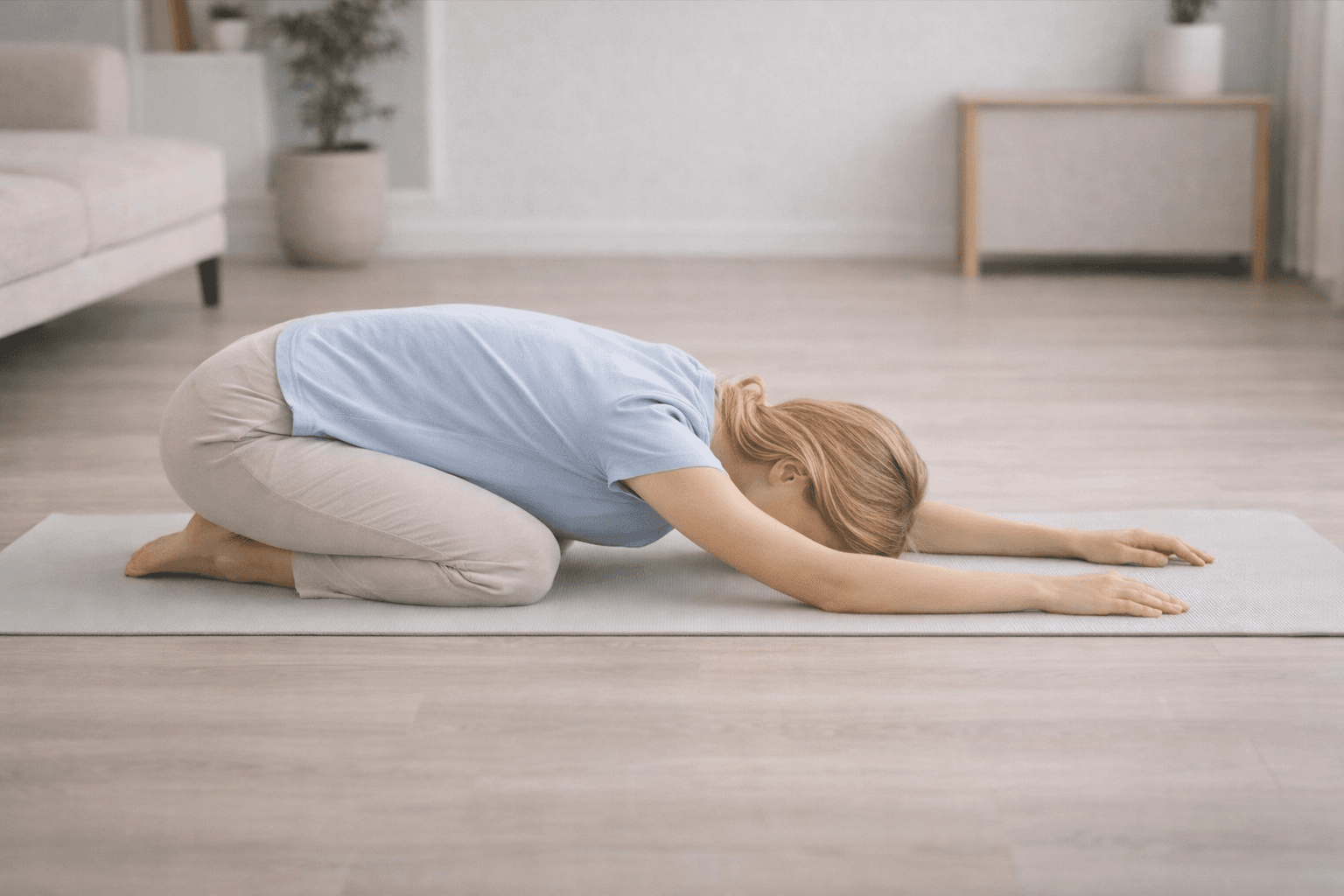
Child’s Pose is a quiet, grounding posture that gives your body a chance to soften after long periods of sitting upright and focusing on a screen. With your forehead resting down and your breathing slowed, it can feel like a full-body exhale.
As you settle into the pose, let your shoulders relax, your jaw unclench, and your eyes stay gently closed. Focus on slow, easy breaths rather than stretching deeply. The goal here is comfort, not intensity.
How to do it
- 1.Kneel on a mat with your knees comfortably apart.
- 2.Sit your hips back toward your heels.
- 3.Fold your torso forward and rest your forehead on the mat.
- 4.Extend your arms in front of you or let them rest by your sides.
- 5.Close your eyes and take slow breaths for 1 to 2 minutes.
2) Savasana or Supported Reclined Rest
3 to 5 minutes · fully relaxed

Sometimes the best reset is simply lying down and letting your whole body rest. Savasana, or a supported reclined position, can be especially useful when your eyes feel overworked and the rest of your body feels tense from prolonged focus.
Let your arms fall open, your legs relax, and your breathing settle into a natural rhythm. If you want more support, place a pillow under your knees or a folded blanket under your head so your neck feels easy.
How to do it
- 1.Lie flat on your back on a mat or bed.
- 2.Let your legs extend comfortably.
- 3.Rest your arms slightly away from your body with palms facing up.
- 4.Close your eyes and breathe naturally.
- 5.Stay for 3 to 5 minutes.
3) Gentle Neck and Shoulder Release
30 to 60 seconds each side · seated

Screen-related eye strain often shows up alongside neck, shoulder, and back discomfort, especially when posture starts to collapse during long periods of device use. A gentle seated neck release can help ease that upper-body tension while giving you a visual break.
Keep this stretch soft. You should feel a mild release, never a sharp pull. Think of it as unwinding tension rather than forcing range of motion.
How to do it
- 1.Sit tall in a chair with both feet flat on the floor.
- 2.Let one shoulder relax down.
- 3.Gently tilt your head to the opposite side.
- 4.Rest your hand lightly near the temple as a guide only.
- 5.Hold for 30 to 60 seconds, then switch sides.
4) Palming
30 to 60 seconds · gentle, no pressure

Palming is a simple rest technique: you warm your hands and lightly cup them over your closed eyes. It is best used as a short relaxation break, not as a treatment or pressure-based massage.
The most important part is softness. Your palms should create a sense of darkness and calm without pressing on the eyes.
How to do it
- 1.Sit comfortably and rub your hands together for a few seconds.
- 2.Close your eyes.
- 3.Cup your palms lightly over your eyes without pressing.
- 4.Relax your shoulders and breathe slowly.
- 5.Stay for 30 to 60 seconds.
For many people, pairing a short routine like this with screen breaks, blinking more often, and better posture is more useful than trying to push through discomfort.
A Few Important Notes
This routine is for comfort and relaxation. It is not a cure for dry eye, headaches, blurred vision, or underlying eye conditions.
If your symptoms keep happening, become painful, or do not improve with rest, it is a good idea to get checked by an eye professional. Persistent eye strain can sometimes be related to dry eye, vision correction needs, or other issues that deserve proper evaluation.